The repair vs. replacement decision is one of the most consequential choices a Birmingham homeowner faces. Here's how to think through it clearly — using the specific factors that matter in Jefferson and Shelby counties.
For homeowners across the Birmingham metro area — in communities from Gardendale and Fultondale in the north to Alabaster and Pelham in the south — the question of whether to repair or replace a damaged or aging roof is one of the most consequential home maintenance decisions they will face. The stakes are high in both directions: unnecessary replacement is a significant avoidable expense, while deferred replacement leads to interior water damage that compounds the total cost of the eventual replacement.
Birmingham's specific conditions make this decision more complex than in milder climates. The region's active storm season creates situations where insurance coverage may change the financial calculus. The age and diversity of Birmingham's housing stock — from the 1940s bungalows of Edgewood and Rosedale to the 2010s construction of Hoover's newer subdivisions — means that the same visible damage can have very different implications depending on the age and overall condition of the roofing system. And the variety of roofing materials found across the metro area — asphalt shingles, metal, slate, tile — each have different repair and replacement economics.
This guide provides a framework for thinking through the repair vs. replacement decision for Birmingham homes, covering the key factors that determine the appropriate course of action: roofing system age, damage extent and type, the condition of underlying components, insurance considerations, and the cost comparison between repair and replacement.
The Primary Factor: Age of the Roofing System
The age of the roofing system is the single most important factor in the repair vs. replacement decision. A roofing system in the first half of its design life is a strong candidate for repair when damage is localized. A system in the second half of its design life — or one that has exceeded its design life — is typically better served by replacement planning, even when the immediate damage is limited.
The reason age matters so much is that a roofing system ages as a whole. When shingles are showing significant wear, the underlayment beneath them has also aged. The flashing at chimneys, skylights, and pipe penetrations has also been exposed to the same years of thermal cycling, UV exposure, and storm events. Repairing the visible damage on an aged roofing system while leaving the underlying components in place is addressing the symptom rather than the root cause — and the underlying components will continue to fail in sequence.
For Birmingham homes with standard architectural asphalt shingles, the inflection point is typically around 20 years. Below 20 years, repair is generally appropriate for localized damage. Above 20 years, replacement planning is warranted, and the decision to repair rather than replace should be made with the understanding that replacement is likely within the next several years regardless.
Assessing Damage Extent: Localized vs. Widespread
The extent of the damage is the second key factor in the repair vs. replacement decision. Localized damage — a section of missing shingles after a wind event, a failed pipe boot causing a specific leak, or a section of damaged flashing at a chimney — is generally appropriate for repair when the overall roofing system is in good condition. Widespread damage — hail impact across the entire roof surface, shingle deterioration affecting multiple slopes, or multiple simultaneous flashing failures — typically indicates that the roofing system as a whole has reached the point where replacement is more appropriate than continued repair.
After Birmingham's spring hail events, the distinction between localized and widespread damage is particularly important. A hail event that produces golf ball-sized hail across a neighborhood typically causes widespread impact damage to every exposed roof surface. In this situation, even if individual shingles appear intact, the granule loss and impact fractures across the entire roof surface have significantly reduced the system's remaining service life. Insurance-covered replacement is often the appropriate response to widespread hail damage, regardless of the roof's age.
The Condition of Underlying Components
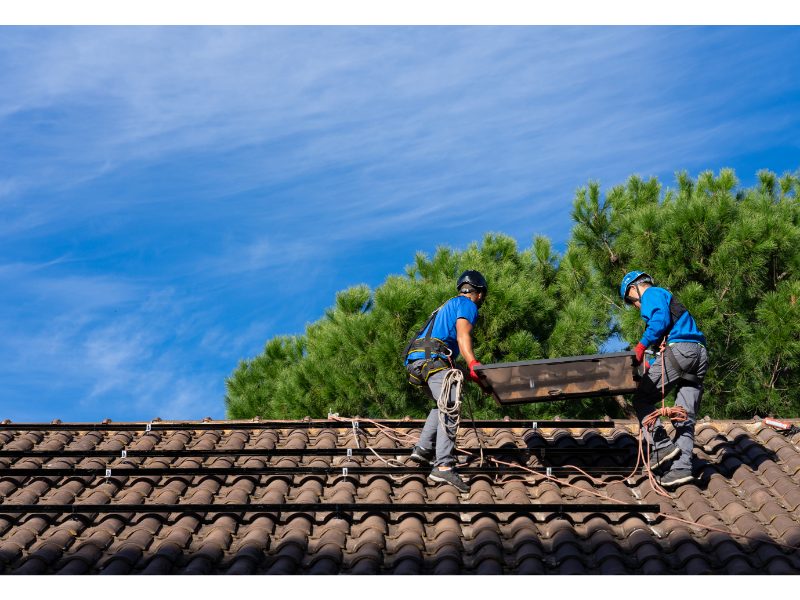
A roof replacement is not simply the installation of new shingles over existing components. A properly executed replacement includes removal of the existing roofing material, inspection and repair of the roof deck, installation of new underlayment, replacement of all flashing components, and installation of new ridge vents and pipe boots. This comprehensive approach ensures that the new roofing system starts with a clean foundation and that all components have consistent service lives.
When assessing whether to repair or replace, the condition of the underlying components should be considered. If the roof deck shows signs of water damage — soft spots, staining, or delamination of plywood panels — repair of the surface roofing material without addressing the deck is not a durable solution. Similarly, if the underlayment is visibly deteriorated — which can be assessed during a professional inspection — repair of the surface material without underlayment replacement leaves the system vulnerable.
Insurance Considerations in Birmingham's Storm Market
Birmingham's active storm season creates insurance dynamics that can significantly affect the repair vs. replacement decision. When storm damage is the trigger for the assessment, the coverage provisions of your homeowners insurance policy are a critical factor. Replacement cost value policies cover the full cost of replacement regardless of the roof's age, making replacement the appropriate response to widespread storm damage. Actual cash value policies reduce the payment by depreciation, which can make replacement less financially accessible for homeowners with older roofs.
Understanding your policy's provisions before a storm event occurs allows you to make informed decisions about coverage. If your policy includes actual cash value provisions for the roof, you may want to consider whether upgrading to replacement cost value coverage is available and cost-effective. Some Alabama insurance carriers have begun offering premium discounts for homes with impact-resistant roofing materials, which can partially offset the cost of upgrading to a more storm-resistant roofing system.
The Cost Comparison: Repair vs. Replacement Economics
The financial comparison between repair and replacement requires looking beyond the immediate cost of each option to the total cost over the relevant time horizon. A repair that costs a fraction of replacement today may be the right choice if the roofing system has 10 or more years of remaining service life. The same repair on a system with 2 to 3 years of remaining service life is a poor investment, because replacement will be required in the near term regardless.
The 50% rule provides a useful heuristic: if the cost of repairing the immediate damage exceeds 50% of the cost of full replacement, replacement is typically the more cost-effective choice. This rule accounts for the likelihood of additional repairs in the near future and the compounding cost of deferred replacement. It also accounts for the fact that a repaired roof on an aging system does not have the same value as a new roof — it simply extends the life of a system that is approaching the end of its service life.
When getting proposals for roof repair in Birmingham, ask the contractor to provide an honest assessment of the roofing system's overall condition and remaining service life. A contractor who recommends repair on a system that clearly warrants replacement is not serving your long-term interests.
Making the Decision: A Practical Framework
For Birmingham homeowners facing the repair vs. replacement decision, a practical framework involves three questions. First: how old is the roofing system, and how does that age compare to its design life? Second: is the damage localized or widespread, and does it affect the entire roof system or just specific components? Third: what are the insurance implications, and does the damage trigger coverage that makes replacement financially accessible?
If the roofing system is in the first half of its design life and the damage is localized, repair is generally appropriate. If the system is in the second half of its design life or has exceeded it, replacement planning is warranted regardless of the immediate repair need. If widespread storm damage has occurred and insurance coverage is available, replacement is typically the appropriate response — it resets the roofing system with new materials and components and eliminates the near-term replacement cost that would otherwise be inevitable.