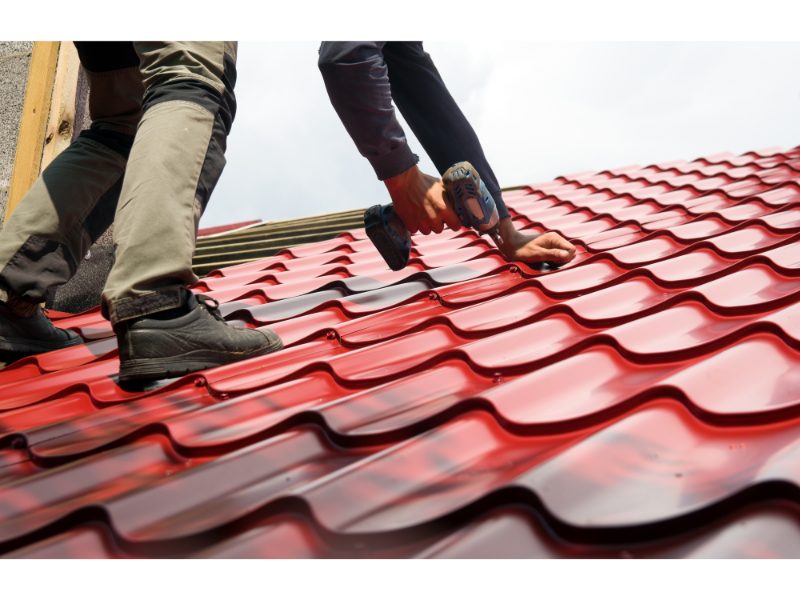
From granule loss in your gutters to sagging decking visible from the attic, these seven signs tell Birmingham homeowners it's time to plan a roof replacement — not another repair.
For homeowners across the Birmingham metro area — from the established neighborhoods of Homewood and Vestavia Hills to the newer subdivisions of Trussville, Pelham, and Alabaster — knowing when a roof has reached the end of its service life is one of the most important home maintenance decisions you will face. A roof replacement is a significant investment, but the cost of delaying a necessary replacement is typically far greater: water infiltration that damages roof decking, insulation, ceiling materials, and in severe cases, structural framing.
Birmingham's climate accelerates roofing wear in ways that homeowners in milder climates do not experience. The combination of intense summer heat — with roof surface temperatures regularly exceeding 150°F on dark shingles — high annual rainfall, active storm seasons, and the thermal cycling that comes with Alabama's temperature swings creates a demanding environment for any roofing system. Understanding the specific signs that indicate replacement rather than repair can save Birmingham homeowners from both premature replacement and costly delayed action.
This article covers the seven most reliable indicators that a Birmingham home's roof is approaching or has reached the end of its service life, drawing on the specific conditions and housing types found across Jefferson and Shelby counties. Whether you're in a 1950s brick ranch in Irondale, a mid-century colonial in Mountain Brook's Cherokee Bend neighborhood, or a 2005-era construction home in Hoover's Ross Bridge community, these signs apply across roofing types and home ages.
Sign 1: Significant Granule Loss in Gutters and Downspouts
Asphalt shingles are coated with mineral granules that serve two critical functions: protecting the asphalt layer from UV degradation and providing fire resistance. As shingles age, these granules loosen and wash off the roof surface into gutters and downspout splash areas. Some granule loss is normal throughout a shingle's life, but significant accumulation of granules in gutters — particularly if it appears suddenly after a storm event — is a reliable indicator of advanced wear or hail damage.
In Birmingham's climate, granule loss is accelerated by the intense UV exposure of summer months and by hail impacts. After a hail event — and Birmingham's spring storm season produces multiple significant hail events most years — granule loss can be dramatic and widespread. When granule loss exposes the underlying asphalt mat, UV degradation accelerates rapidly, and the shingle's remaining service life is measured in months rather than years. If you're finding significant granule accumulation in your gutters or in the splash areas at the base of your downspouts, schedule a professional inspection promptly.
Sign 2: Shingles That Are Curling, Cupping, or Clawing
Asphalt shingles deform in characteristic ways as they age. Curling occurs when the edges of the shingle turn upward, exposing the underlying layers to wind and water. Cupping is the opposite deformation — the center of the shingle sinks while the edges remain flat — and is often associated with moisture imbalance between the top and bottom surfaces of the shingle. Clawing describes a pattern where the middle of the shingle lifts while the edges remain adhered, creating a raised center that is particularly vulnerable to wind uplift.
All three deformation patterns indicate that the shingle has lost its flexibility and is approaching the end of its service life. In Birmingham's climate, the thermal cycling between summer heat and winter cold accelerates these deformation patterns, particularly on south- and west-facing roof surfaces that receive the most direct sun exposure. Shingles that are curling or cupping are also more vulnerable to wind damage during Birmingham's spring storm season — lifted edges can catch wind and result in shingle loss during events that would not damage a newer roof.
Sign 3: Visible Daylight in the Attic
One of the most direct indicators of a roofing failure is visible daylight penetrating into the attic space. This can occur through failed flashing at chimneys, skylights, or pipe penetrations; through gaps in the ridge cap; or through areas where shingles have been lost or have deteriorated to the point of failure. A simple attic inspection on a bright day — turning off all artificial light and looking for any points of light penetration — can identify active failures that may not yet be producing visible interior water staining.
In Birmingham's older housing stock — the 1940s through 1960s homes found in neighborhoods like Edgewood, Rosedale, and the areas around Five Points South — original board sheathing rather than plywood or OSB decking is common. Board sheathing can develop gaps between boards as it ages and dries, and these gaps can allow both light and water infiltration. If your attic inspection reveals daylight through the roof deck itself rather than through a specific penetration, the deck condition needs to be assessed as part of any replacement planning.
Sign 4: Sagging or Uneven Roof Planes
A roof that is sagging, dipping, or visibly uneven when viewed from the ground is indicating structural issues that go beyond the roofing material itself. Sagging can result from long-term water infiltration that has rotted the roof decking or structural framing, from inadequate original construction, or from the accumulated weight of multiple layers of roofing material. In Birmingham's climate, where annual rainfall averages 54 inches and storm events can be intense, water infiltration through failed roofing components can cause rapid deterioration of wood structural members.
Sagging roof planes are a serious structural concern that requires immediate professional assessment. Unlike granule loss or shingle deformation — which indicate that replacement planning is warranted — sagging indicates that the underlying structure may be compromised and that the situation is urgent. Homes in Birmingham's older neighborhoods, where original construction may have used lumber that does not meet current structural standards, are particularly vulnerable to this type of deterioration.
Sign 5: Flashing Failures Around Chimneys and Penetrations
Flashing — the metal components that seal the transitions between the roofing material and vertical surfaces like chimneys, skylights, and dormers — is one of the most common sources of roof leaks in Birmingham homes. Original galvanized flashing on homes built before the 1980s has typically corroded to the point of failure, and even newer aluminum or lead flashing can fail due to thermal cycling, improper installation, or storm damage. When flashing fails, water infiltration typically occurs at the most vulnerable points: the step flashing along chimney sides, the counter flashing embedded in chimney mortar joints, and the pipe boot flashings around plumbing vents.
Isolated flashing failures can often be repaired without full roof replacement. However, when flashing failures are widespread — particularly on older homes where the original flashing has reached the end of its service life — replacement of the entire flashing system as part of a roof replacement project is the more cost-effective approach. Attempting to repair individual flashing failures on a roof with widespread flashing deterioration typically results in a cycle of recurring leaks as adjacent flashings fail in sequence.
Sign 6: Age — Your Roof Has Reached Its Design Life
The most straightforward indicator that a roof replacement should be planned is age. Standard three-tab asphalt shingles — still found on many Birmingham-area homes built or re-roofed before 2000 — have a design life of 15 to 20 years. Architectural shingles carry design lives of 25 to 30 years. If your roofing system is approaching or has exceeded these ages, replacement planning is warranted even in the absence of visible damage, because the underlying components — underlayment, flashing, pipe boots, and ridge vents — have also aged and are approaching failure.
In Birmingham's climate, these design life estimates should be treated as upper bounds rather than guarantees. Roofs on south-facing slopes, roofs with inadequate attic ventilation that accelerates shingle deterioration from below, and roofs that have experienced multiple storm damage events may reach the end of their service life before the design life would suggest. A professional inspection on any Birmingham home with a roofing system more than 15 years old should include an honest assessment of remaining service life.
Sign 7: Recurring Leaks Despite Multiple Repairs
If you have had the same area of your roof repaired multiple times and the leak continues to recur, the underlying issue is typically not the specific repair but rather the overall condition of the roofing system. Recurring leaks despite professional repairs indicate that the roofing material has deteriorated to the point where it cannot be effectively sealed, that the underlying deck has been compromised by long-term water infiltration, or that the repair is addressing a symptom rather than the root cause.
For Birmingham homeowners, the cost-benefit analysis of continued repair versus replacement becomes clear when repairs are recurring. Each repair visit has a cost, and the cumulative cost of multiple repairs on an aging roof often approaches or exceeds the cost of replacement within a few years. More importantly, each period between repairs is a period of active water infiltration that is causing damage to the interior of the home — damage that adds to the total cost of the deferred replacement decision.